

By OTN Editorial
Trend analysis | Research checked September 25, 2026
What would make your next phone feel genuinely better?
Not in a launch presentation. On a Tuesday. When you’re trying to book a ride, photograph a moving child, find a signal or make your battery last until you get home.
That is our starting point for 2027. There are already interesting developments to follow—but a product announcement is not a promise that every phone will offer the same experience next year.
We selected these ten themes for their potential everyday relevance and the concrete signals behind them. This is an editorial watchlist, not a ranking based on sales forecasts. The examples are announced products, services or policies; the 2027 questions are our analysis, not confirmed roadmaps.
And stay with us for number ten. It might change the question from “Which new phone should I buy?” to “Do I need a new one at all?”
1. Your next shopping companion might be an AI agent
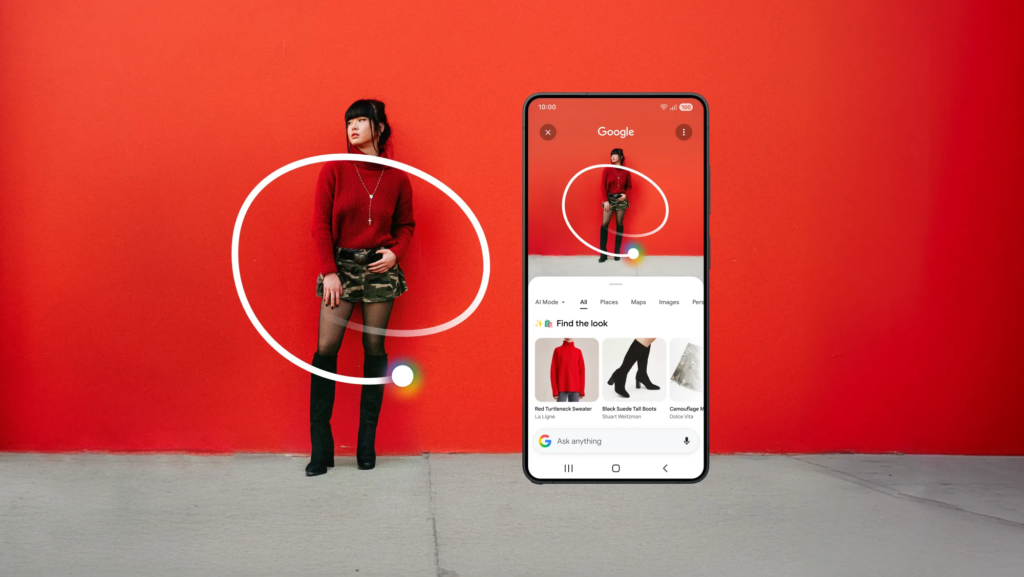
Imagine asking your phone to help choose a backpack that fits your laptop, respects your budget and arrives before a trip. Not ten blue links: help moving from a need to a decision.
Google has announced Gemini task automation for selected apps, devices and markets. Meta is pursuing the shopping opportunity too: its Muse announcement describes shopping assistance and checkout through Stripe’s Link, with conditions attached. Neither announcement means an agent can shop successfully at every retailer. Google’s automation announcement, Meta introduces Muse.
▶ Watch our full breakdown of Meta’s Muse launch on the On Tech Now YouTube channel
The 2027 question: How much of shopping will we feel comfortable delegating?
The opportunity is appealing: less comparing tabs and repeating instructions. The test is more demanding. Does the recommendation respect your priorities? Can you check the seller, delivery, returns and final price before committing?
A helpful shopping agent should make your choices easier—not make them disappear.
2. “Included” could become the most important word on the box
You buy a phone, get used to a useful feature, and then wonder: will the next version still be included?
That is a question worth asking—not a confirmed prediction that today’s free tools will suddenly require payment.
Samsung currently states that its basic Galaxy AI features are free, while future releases may include enhanced features or new paid services. It also distinguishes third-party terms. This is evidence of room for paid additions, not proof that existing free features are being withdrawn. Samsung’s Galaxy AI conditions.
The 2027 question: Where will companies draw the line between the phone you bought and the services you subscribe to?
There are three different stories to watch: a genuinely new paid capability, the end of a clearly disclosed trial, and a previously included function moving behind a paywall. We should not confuse them.
There is room for useful paid services. The optimistic outcome is choice with clear terms—not a surprise bill attached to a familiar button.
3. Silicon-carbon batteries: the real test takes years
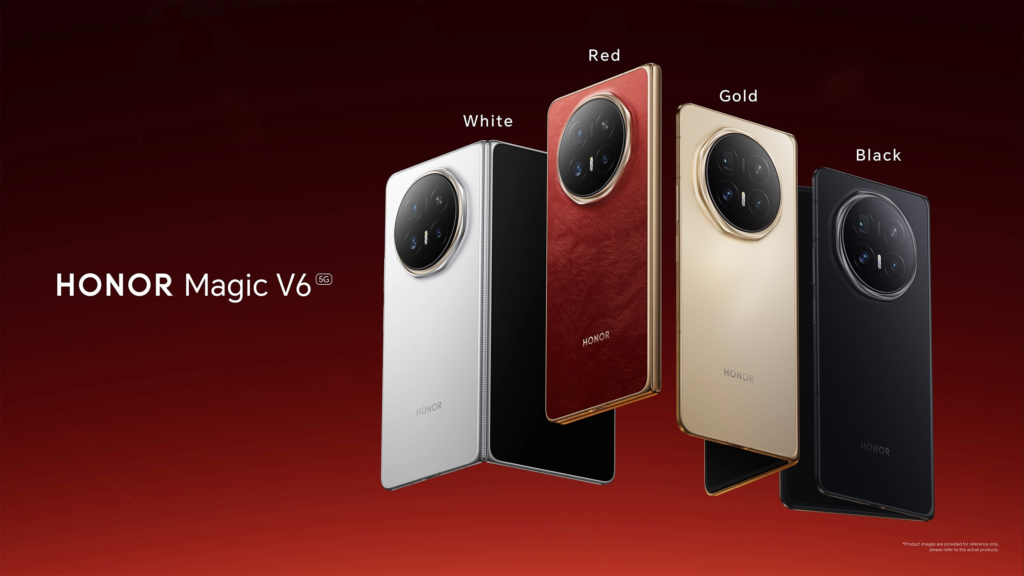
Excellent battery life on day one is welcome. Excellent battery health years later is a different achievement.
The packaging opportunity is already visible in commercial products: HONOR lists a typical 6,660mAh silicon-carbon battery for its Magic V6. But a capacity specification cannot tell us how that battery will age in your hands. HONOR’s announcement.
There are longevity claims to examine. OnePlus says the OnePlus 15’s Silicon NanoStack battery maintains more than 80 percent health after four years. That is a manufacturer claim about expected longevity, not four years of independent observation of the model. OnePlus’s launch statement.
The 2027 question: Will long-term evidence make us as confident about lifespan as we are excited about capacity?
We will look for test conditions, charge-cycle data, warranty terms and independent follow-up. Different implementations should not be treated as one identical battery.
The aim is not to suggest silicon-carbon ages badly. It is to ask the question a buyer keeping a phone for years deserves answered.
4. Foldables: passport proportions or more folds?

Which would you rather carry: a compact, wider phone that opens like a book, or a device that unfolds again to reveal something closer to a full-size tablet?
The format debate is no longer just about whether a screen can bend. Samsung’s 2026 Fold8 presentation describes new display proportions, while its Galaxy Z TriFold announcement describes a 10-inch screen that folds twice. “Passport-style” is our shorthand for a shorter, wider shape—not an official industry category. Samsung’s Fold8 presentation, Galaxy Z TriFold announcement.
The 2027 question: Which shape wins people over—and for which tasks?
A travel map, a film and a spreadsheet ask different things of a screen. The winning design for one person may feel unnecessarily complicated to another.
We would compare comfort when closed, useful space when open, app layouts, weight, repair options and price. More folds should earn their place through more usefulness.
There may not be one winner. That could be good news for choice.
5. Cameras: better optics or smarter pixels?
Imagine photographing a child blowing out birthday candles. You want the moment, not a debate about image processing.
Behind that picture, however, manufacturers have choices: improve how light is captured, improve how captured information is processed—or combine both.
Apple’s iPhone 18 Pro announcement describes variable aperture alongside a new computational imaging pipeline. HONOR’s Magic V6 announcement combines a periscope telephoto camera with AI imaging features. These are examples of hardware and software developing together, not OTN test results or evidence of fixed brand strategies for 2027. Apple’s camera announcement, HONOR’s imaging announcement.
The 2027 question: Will brands distinguish themselves by capturing more of the scene—or by doing more with the image afterward?
Here, words matter. Optical and mechanical improvements, computational photography and generative editing are not interchangeable. Combining exposures to manage a difficult scene is not the same editorial question as adding something that was never there.
We want better photos and more creative freedom. We also want understandable controls over when the phone is recording a memory and when we are transforming it.
6. More reasons to look below the flagship shelf
Here is a refreshing shopping question: which expensive features would you actually miss?
Samsung’s Galaxy A57 and A37 announcement includes AI-assisted tools and support commitments of up to six OS generations and six years of security updates. That does not make them equivalent to flagship devices, but it shows why lower-priced ranges deserve a closer look. Samsung’s announcement.
The 2027 question: How much of the experience people value will be available without paying top-tier prices?
The answer will depend on the individual model and market. Our interest is not in declaring flagships unnecessary. It is in finding where paying more produces a benefit you will actually notice.
7. Satellite connectivity with more everyday relevance
Losing cellular coverage does not always happen on an expedition. Sometimes it happens on a quiet road.
T-Mobile already advertises satellite texting and selected satellite-ready apps on compatible devices. Its terms also warn about limited speeds, coverage gaps, delays and unavailable service; location and sky visibility matter. T-Mobile’s service details.
The 2027 question: Will useful satellite functions reach more compatible phones and places with clearer, affordable terms?
This is not a promise of ordinary mobile broadband everywhere. Nor should it be treated as guaranteed emergency access. The opportunity is more modest—and still valuable: another way to communicate when a normal connection is missing.
8. Ecosystems: can Android’s variety feel as connected as Apple’s?
Start a message on one device. Continue on another. Share a photo without sending it to yourself first.
Apple’s Continuity features, including Handoff, provide a useful reference for this kind of integration across supported devices and apps. We use Apple as a benchmark here—not as the automatic winner of every possible comparison. Apple’s Continuity overview.
Android brings a different challenge: can choice across manufacturers become a consistently connected experience?
There are concrete bridges to watch. Google introduced Quick Share interoperability with AirDrop starting with the Pixel 10 family. That is progress in a specific task, not proof that entire ecosystems are interchangeable. Google’s cross-platform sharing announcement.
The 2027 question: Can Android narrow the integration gap while keeping the freedom to mix brands—and can Apple introduce something meaningfully new in response?
We would look beyond demonstrations to everyday combinations: your phone, someone else’s laptop, the headphones you already own.
The operating system alone cannot solve everything. Manufacturer support, applications, accounts and compatibility requirements all shape the result. The most exciting advance might be surprisingly ordinary: your devices cooperating without you having to negotiate.
9. The best deal may look different after three years
Item two asks what remains included. This one asks what the whole ownership experience costs.
Think beyond the phone’s price: the accessories you actually need, optional services you choose to keep, repair costs and how long the device stays useful. A lower checkout price and a lower long-term cost are not necessarily the same thing.
An expiring perk is a useful reminder. HONOR’s Magic V6 announcement includes a three-month Google AI Pro trial—not permanent access. Whether keeping that service is worthwhile depends on your use and the applicable renewal terms. HONOR’s bundle announcement.
The 2027 question: Will it become easier to compare the cost of living with a phone, not just buying it?
A simple personal comparison can help: purchase price, foreseeable extras and a realistic period of use. Treat future resale value as uncertain, not guaranteed savings.
This is where our next point changes the equation. What if the better deal is not another phone?
10. The most meaningful upgrade might be keeping your phone
Here is the twist: progress does not have to end with a new purchase.
EU smartphone rules applying from June 2025 address durability, battery longevity, repair and software support. The associated label includes repairability information. These are measures for covered products in the EU market, not a worldwide promise or a new rule starting in 2027. European Commission overview.
The 2027 question: Will longer support and more practical repair options make keeping a phone the more attractive choice?
If your device still does what you need, an affordable battery replacement and continued security support might matter more than another launch.
That is not a claim that consumers everywhere are already delaying upgrades. It is OTN’s closing proposition: a better smartphone market should make buying exciting—and keeping what you own easier.
What’s next? Better reasons, not just bigger promises
There is plenty here to be optimistic about. More useful assistance. Better endurance. More choice. Devices that remain useful longer.
But the test stays ordinary: does a development solve a problem you have, at a cost and with conditions you accept?
We will follow what ships, where it works and what independent testing establishes. For now, consider this a map of questions worth asking—not a schedule of guaranteed breakthroughs.
Which would change your day most: longer battery life, AI that genuinely saves time, or a phone you can happily keep for years?
Editorial transparency: This article was prepared with AI assistance. It draws on linked primary sources and distinguishes announced capabilities from OTN’s forward-looking analysis. It does not report hands-on testing of the products discussed. It was reviewed by the OTN editorial team before publication.
Sources
- Google — A more intelligent Android on Samsung Galaxy S26 (article and image)
- Meta — Introducing Muse (article and video)
- Samsung — Galaxy AI
- HONOR — HONOR Magic V6 launch
- OnePlus — OnePlus 15 launch
- Samsung Newsroom — Galaxy Unpacked July 2026: Galaxy Z Fold8
- Samsung Newsroom — Introducing Galaxy Z TriFold
- Apple Newsroom — iPhone 18 Pro and iPhone 18 Pro Max
- Samsung Newsroom — Galaxy A57 5G and Galaxy A37 5G
- T-Mobile — Satellite phone service
- Apple — Continuity
- Google — Quick Share and AirDrop
- European Commission — New EU rules for durable, repairable smartphones and tablets
- Images and video: Google (Circle to Search), Meta (Muse shopping demo), HONOR (Magic V6), Samsung (Galaxy Z TriFold) — official manufacturer media
- Cover image: AI-generated conceptual illustration, created by OTN with Google Flow